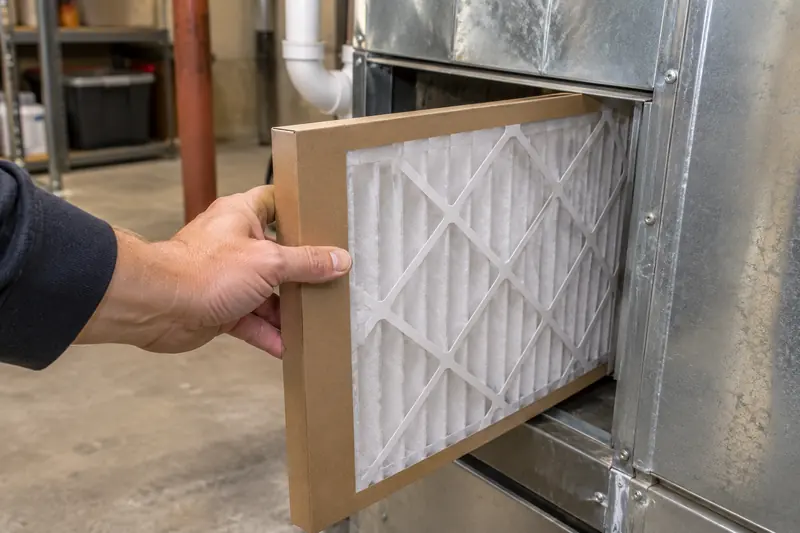
Spring & fall
Twice a Year: Looking After a Heat Pump
Heat pump maintenance means a professional checkup before each heating and cooling season, plus the jobs you handle yourself: monthly filter checks and an outdoor unit kept about 2 feet clear and rinsed gently with the power off.
Why check a heat pump twice a year?
A heat pump works in both seasons, so it gets two pre-season checkups instead of one. ENERGY STAR recommends having a contractor do annual pre-season check-ups, and Lennox's EL21KLV installation instructions go further: the system should be inspected and serviced before each cooling and heating season by a licensed professional HVAC service technician.
The Ohio Valley calendar fits that rhythm. Spring is the time to ready cooling before a summer that brings Louisville about 43 days at 90°F or hotter in a normal year, and fall is the time to ready heating before the first of its roughly 74 freezing nights (NOAA 1991–2020 normals). The mild weeks in between are when a technician can run the system both ways without a heat wave or a cold snap pushing the schedule.
The stakes are efficiency and wear. ENERGY STAR's checklist notes that airflow problems alone can reduce efficiency by up to 15 percent, and Goodman says lifespan depends on the maintenance schedule, filter changes and proper installation.
What can you check yourself?
You can handle the filter, the space around the outdoor unit, light cleaning outside, the condensate drain and the thermostat. Lennox lists a monthly look around the outdoor unit for grass clippings, leaves and papers, and says to trim shrubs back. How much space, and how to rinse the coil without harm, are the next two sections.
A few more checks fit a homeowner's list:
- Keep sprinklers off the unit. Lennox says long exposure to treated water corrodes its steel and aluminum parts.
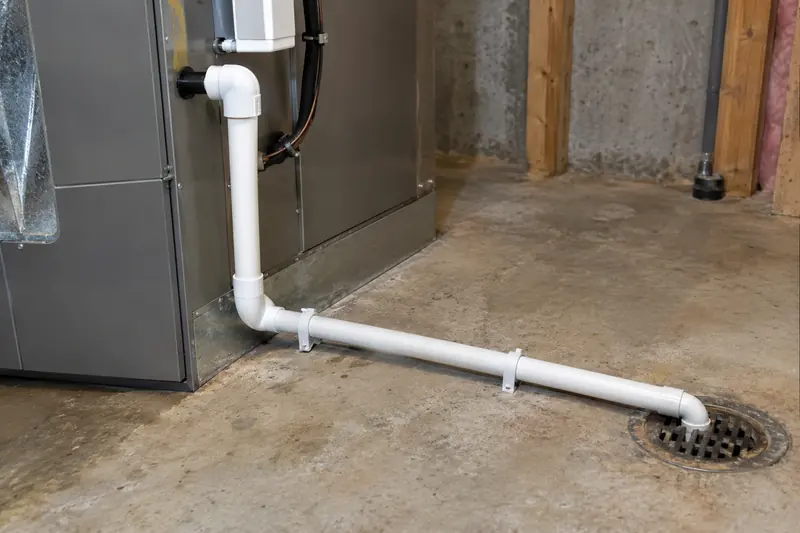
- Look at the condensate drain line the way the installer showed you; Lennox suggests a monthly check for obstructions.
- In winter, keep snow below the louvers and fix gutters that drip on the unit, as the outdoor unit sections below explain.
- Before calling for service, check the thermostat mode, the breakers and the disconnect, and confirm the filter is clean.
Anything electrical or refrigerant-related stays with the technician. If you're unsure, call a licensed technician.
How much space should a heat pump outdoor unit have?
At least 2 feet of open space is the common homeowner guideline; your unit's installation manual sets the real minimums. Carrier's troubleshooting page says to keep at least 24 inches clear for airflow while following the clearance requirements for your specific model, and Trane says to keep flowers, shrubs and vines at least two feet away on all sides.
Manuals can ask for more. The Lennox EL21KLV instructions call for 30 inches on the service side by the control box, 36 inches on another side, as little as 12 and 6 inches on the last two, and 48 inches above the top. A deck, a fence panel or a lattice screen built after the install can quietly break those numbers, so check the manual before adding one.
How do you rinse the outdoor coil safely?
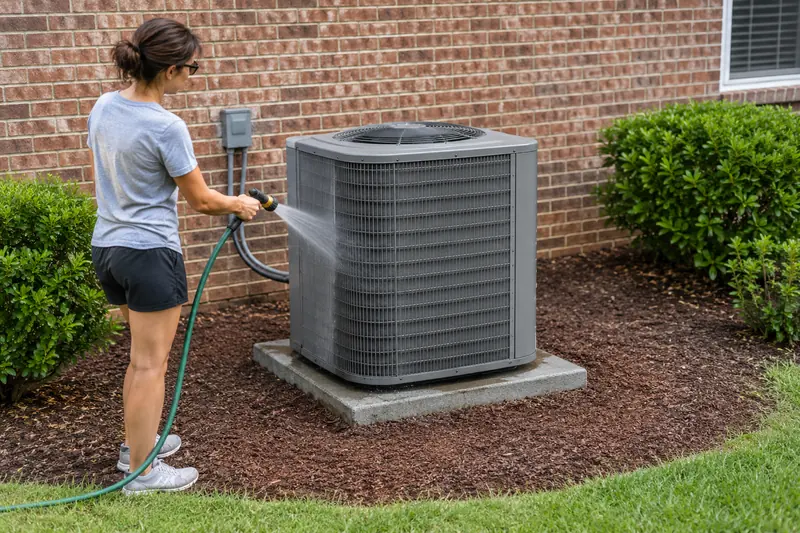
Turn the power off first, then rinse gently from the outside with a garden hose. Lennox's homeowner instructions say to turn the electrical power to the unit off at the disconnect switch before any service or maintenance; you can also switch it off at the breaker panel. Nothing inside the disconnect box is a homeowner job.
Then follow Trane's limits. A garden hose can gently spray the condenser coil from the outside, but the jet setting or a power washer can bend or damage the fins. Spray from the outside in, with a shower or soft setting, and stop there.
Do not remove panels to reach the inside of the coil, and do not touch the indoor coil at all. Carrier says not to attempt to remove panels or work on internal components, and Trane says to leave the indoor coil to HVAC professionals. Trane also notes that some do-it-yourself maintenance can void a warranty, so read yours before you start.
Do not remove panels to reach the inside of the coil, and do not touch the indoor coil at all.
Why should the unit sit level on its pad?
A level pad keeps the unit stable, draining properly and off wet ground. The Lennox EL21KLV instructions say to install the unit level or, on a slope, within 2 degrees, about 2 inches per 5 feet, sloping away from the house.
Pads settle over time, especially on fill soil beside a new foundation. If yours has tipped toward the house, sunk into the mulch or cracked, a contractor can reset it. A supply house lists condenser pads (PlumbingSupplyAndMore, shares owners with Heat Pump Weather); setting one under a running unit means disconnecting and moving it, which is the installer's job.
Should you cover the outdoor unit?
No, not a heat pump. ENERGY STAR's 2009 heating and cooling guide says a central air conditioner can be covered in winter, but heat pumps need to be left uncovered to operate properly through the winter. Lennox's own clearance figures include open space above the top for the same reason: the unit needs air.
What winter does call for is the same short list in colder clothes: brush light snow off the top with a broom, keep snow below the louvers, and fix gutters that drip onto the unit. The defrost cycle page explains what normal frost looks like.
How often should the filter change?
Check the filter every month, and clean or replace it when it looks dirty or on the schedule in your manual, often every 1 to 3 months for disposable filters, per Trane. DOE's 2022 Energy Saver Guide and ENERGY STAR both phrase it as a monthly inspect, clean or change, and Lennox says to replace a disposable filter with one of the same type and size.
Carrier stresses monthly filter checks especially during peak seasons. Write the filter size on the air handler or in your phone so the replacement matches; a supply house lists air filters by size and MERV rating (PlumbingSupplyAndMore, shares owners with Heat Pump Weather), and the right MERV for your system is a question for the installer.
Ductless units differ. The Building America Solution Center says many mini-split heads use washable mesh filters meant to be cleaned about every two weeks, by vacuum or wash, or as the manual directs. The ducted vs ductless page covers the trade-offs.
What does a technician's heat pump maintenance visit cover?
A technician's checkup covers the parts a homeowner shouldn't open: electrical connections, refrigerant, airflow and controls. ENERGY STAR's checklist lists tightening electrical connections and measuring voltage and current on motors, checking the refrigerant level, cleaning and adjusting blower components, and inspecting the condensate drain. Carrier says refrigerant checks, electrical testing and mechanical repairs belong to a qualified HVAC professional.
Heat-pump-specific items are worth naming when you book. Ask the technician to confirm the defrost cycle works before winter (the defrost page explains what normal looks like), that aux heat comes on only when it should, and that the thermostat is still configured for a heat pump. Only an EPA Section 608 certified technician may handle refrigerant.
Ask for the readings in writing each visit. Numbers from one spring to the next tell you more about a slow decline than any single visit, and they help when it is time to weigh replacing an old heat pump.
| Task | Who | How often |
|---|---|---|
| Check air filter; clean or replace | Homeowner | Monthly check |
| Clear leaves, clippings, debris; trim shrubs | Homeowner | Monthly look |
| Gentle hose rinse of outdoor coil, power off | Homeowner | As needed |
| Electrical connections, voltage and motor current | Technician | Each pre-season visit |
| Refrigerant level and charge | Technician (EPA 608) | Each pre-season visit |
| Blower cleaning and airflow | Technician | Each pre-season visit |
What about a humidifier on the system?
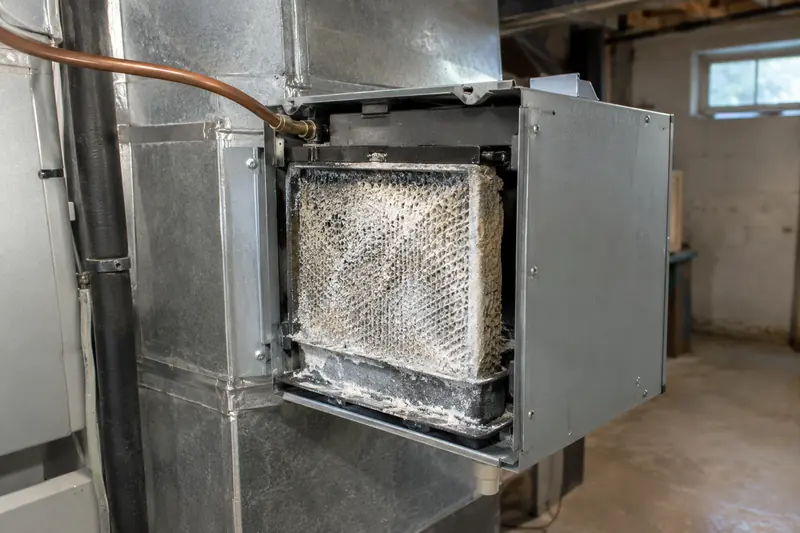
If a whole-house humidifier is mounted on the air handler, it needs its own care, and the maker's manual sets the schedule. Honeywell's support page on humidifier pads says to replace the pad every year at the start of the heating season, and that with hard water you may need a new pad mid-season to keep it working well.
Water quality drives the cleaning interval. Honeywell's HE360 owner's guide says the humidifier can use hard or soft water, that hard water leaves mineral deposits that are more difficult to clean, and that cleaning runs every 1 to 3 months depending on water quality. The same guide says to clean the unit and shut it off at the end of the heating season. Opening the humidifier means working around its power and water supply, so make it part of the fall technician visit, and know your water's hardness so the technician can set the interval.
Knowing your water hardness helps you plan pad changes. A hardness, iron and pH field test kit (Quality Water Treatment, shares owners with Heat Pump Weather) is one way to measure it at the tap. Keep indoor humidity in range too: EPA advises staying below 60 percent, ideally 30 to 50 percent, and the humidity page covers summer.
Which outdoor unit jobs belong to a technician?
Anything involving refrigerant, electrical parts, inner coil cleaning or ice that will not clear belongs to a technician. ENERGY STAR's checklist assigns contractors the pre-season checkups, tightening electrical connections, measuring motor voltage and current, and checking refrigerant, which EPA Section 608 limits to certified technicians.
Carrier adds two warnings worth keeping. If a breaker trips repeatedly, do not keep resetting it. And a frozen coil in summer is suspicious: if ice is more than 1/4 inch thick or does not clear, turn the system off and call a qualified HVAC professional. Never chip at ice on the coil or the copper lines.
Trane recommends professional heat pump maintenance in spring and fall, and the technician's visit described above lists what one covers. If you're unsure, call a licensed technician.
| Task | Who | How often | Source |
|---|---|---|---|
| Clear leaves, clippings and fuzz | Homeowner | Monthly | Lennox EL21KLV manual; Trane |
| Keep shrubs about 2 feet back | Homeowner | Each season | Carrier; Trane |
| Gentle hose rinse, power off | Homeowner | As needed | Trane; Lennox |
| Check indoor drain line | Homeowner, as shown | Monthly | Lennox; ENERGY STAR |
| Electrical, refrigerant, inner coil | Technician | Spring and fall | ENERGY STAR; Carrier |
Anything involving refrigerant, electrical parts, inner coil cleaning or ice that will not clear belongs to a technician.
Loose ends
Smaller questions readers ask about this subject, answered briefly.
Is a spring and fall checkup really needed for a newer heat pump?
Lennox's manual calls for service before each cooling and heating season, whatever the unit's age. Trane adds that some DIY work can void a warranty, so read your warranty terms too.
Can you clean the outdoor coil with a garden hose?
Yes, gently, from the outside, with the power off at the disconnect or breaker. Trane warns against the jet setting, and Lennox says to switch power off before any maintenance.
What MERV filter should a heat pump use?
Use the type and size the manual lists, as Lennox advises. If you want a higher MERV, ask the installer whether the blower and ducts can handle it.
Should the condensate drain be flushed?
Check it as the installer showed you; Lennox suggests a monthly look for obstructions. ENERGY STAR notes a plugged drain can cause water damage and affect humidity, so a clog is a technician call.
Can I use coil cleaner spray on the outdoor unit?
The makers read for this page describe only a gentle garden-hose rinse for homeowners. Chemical cleaning is part of a technician's visit.
Is it safe to mow right up to the unit?
Mowing is fine, but blow the clippings away from the unit, not into it. Lennox names grass clippings first in its monthly check.
My unit hums but the fan won't spin. What now?
Check that the thermostat is set to Cool and the disconnect and breaker are on. Beyond that, a stalled fan is a job for a technician, not something to poke at.