Summer
Sized to the House: Manual J and the Oversized Heat Pump
Manual J sizing is ACCA's load calculation of the heat a house loses on a cold design night and gains on a hot one; a heat pump sized without it can end up oversized, short cycling and leaving July air clammy.
What is a Manual J load calculation?
A Manual J load calculation estimates how many BTUs per hour a house loses in winter and gains in summer at its local design conditions. ACCA's Manual J page describes the 8th Edition as the national ANSI-recognized standard for producing equipment sizing loads for single-family homes, townhouses, condominiums and manufactured homes.
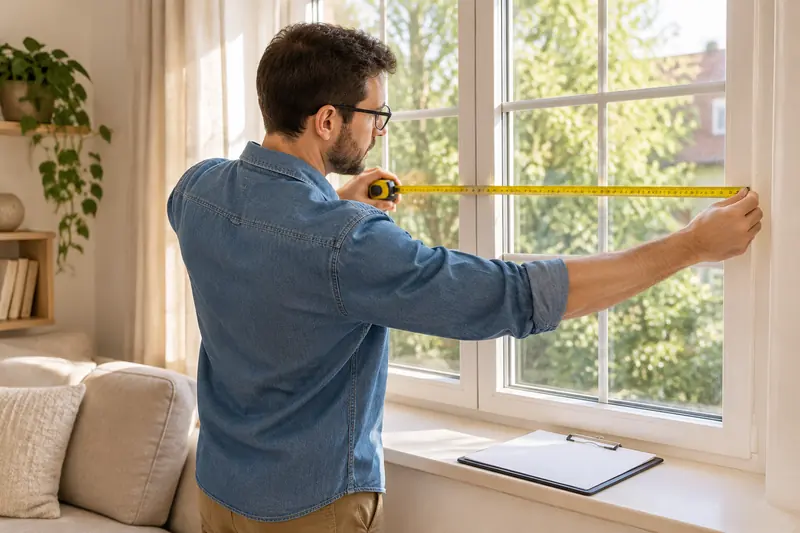
It runs component by component: walls, ceilings, floors, windows and glass doors, infiltration, ventilation, ducts and internal gains from people and appliances. The result can be a whole-house "block" load or a room-by-room load. Room loads matter later, because they set how much air each room's duct should carry.
ACCA says a proper Manual J calculation is required by national building codes and most state and local jurisdictions. Kentucky's residential energy code is the 2009 IECC, per DOE's code status page; ask your local inspector how it is enforced on a replacement.
Why does tons-per-square-foot sizing fail?
Square footage says nothing about how a house gains or loses heat. ACCA's Manual J verification checklist names "500 ft²/ton," "400 CFM/ton" and "total cooling capacity = 1.3 x sensible cooling capacity" as inappropriate and inadequate rules of thumb, and says methods not based on actual construction details are unlikely to size equipment correctly.
Two houses of the same size on the same Lexington street can need very different equipment. One has new windows, a sealed attic and ducts in conditioned space; the other has single-pane glass facing west and a leaky crawlspace duct system. The rule of thumb sizes them the same.
ACCA also warns about "seemingly trivial" mistakes, such as ignoring efficiency upgrades or assuming the original installation was right. Copying the old unit's size is one version of that: if the attic got more insulation since, the old size is now too big. The next section shows what that does in July.
What does an oversized heat pump do?
An oversized heat pump runs in short bursts: it satisfies the thermostat fast, shuts off, and repeats. ENERGY STAR's quality installation page says oversized equipment may cycle too frequently, resulting in less comfort and a shorter lifespan.
ACCA's code committee lists the rest in its Manual J verification checklist. The thermostat's own room may be fine while other rooms swing in temperature and drift further apart. ACCA adds higher installed cost, higher operating and maintenance costs, larger ducts and more service calls.
ENERGY STAR's 2009 heating and cooling guide puts the myth plainly: many homeowners believe bigger is always better, but a system that is too large will not keep the house comfortable because of frequent on/off cycling.
Why does short cycling leave humidity behind?
Short cycling cuts drying time: the cold indoor coil wrings water out of the air as it runs, and an oversized unit stops before much of it has drained. PNNL says oversized units that short cycle do not provide proper temperature or humidity control. The PNNL ductless heat pump guide explains the yardstick: the sensible heat ratio (SHR), where lower means better drying. A traditional heat pump's usual SHR is around 0.75, which has historically been enough when the unit is properly sized and humidity is not abnormal.
Take away the "properly sized" part and the drying falls behind. ACCA says oversized equipment may cause degraded humidity control and increase the potential for mold growth, allergic reactions and respiratory problems. EPA's moisture guidance sets the target the house is missing: below 60% relative humidity.
The Ohio Valley tests this every summer. Air Force engineering weather data hosted by NOAA, covering 1988–2017, counts 777 hours a year at Louisville at or above a 73°F wet bulb, per the Louisville design data file. A unit that cools in short sprints spends those hours chilling damp air instead of drying it.
Why is heat pump sizing harder than air conditioner sizing?
A heat pump has to cover two loads with one machine, and in most of the country they do not match. PNNL's cold-climate sizing guide says right-sizing for cooling usually leaves heating capacity short, while right-sizing for heating usually oversizes cooling.
That pull toward a bigger unit is real here, where Louisville averages 18.5 nights a year at or below 20°F (NOAA 1991–2020 normals). ORNL notes that single-speed units sized to the cooling load typically reach their balance point somewhere in the upper 20s to low 30s, with backup heat covering colder hours. Going bigger to shave strip heat can cost comfort in July.
PNNL's answer is variable-capacity equipment, which it says can be right-sized for heating and oversized for cooling with less concern about comfort and efficiency, because it throttles down on mild days. The same guide warns that some of those units still may not dry the air well and often need variable-speed blowers to do it.
A heat pump has to cover two loads with one machine, and in most of the country they do not match.
How do you tell if your heat pump is oversized?
The symptoms point to it, but only a load calculation confirms it. Watch for short runs on a hot afternoon, a house that reaches the setpoint yet feels sticky, a hygrometer that sits above 60%, and back bedrooms that run warmer or cooler than the hall. ACCA's checklist names those room-to-room differences as a sign of oversized equipment.
Other faults mimic oversizing. ENERGY STAR says poor airflow can cause overly damp air, and its 2009 guide lists humidity problems, excessive dust and rooms that never seem comfortable as signs of leaky or poorly insulated ducts. A fan left on "On" can also re-wet the air, as the summer settings feature explains.
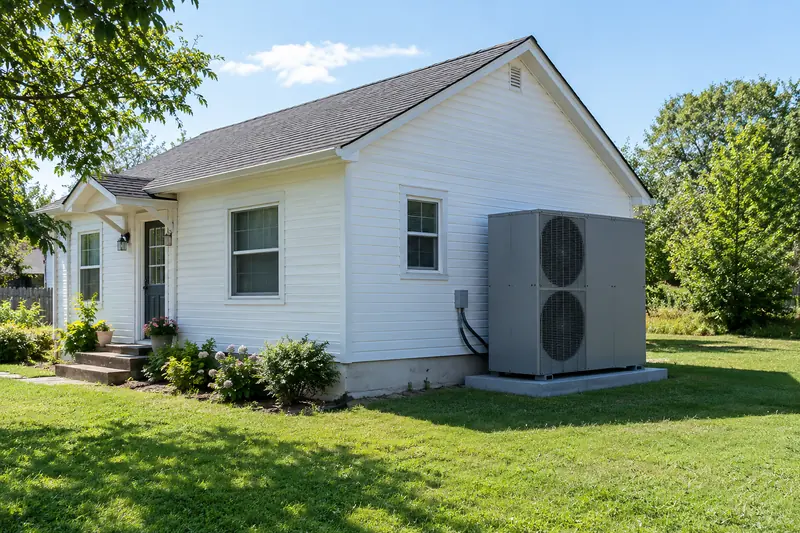
To check size, find the model number on the outdoor unit's nameplate and ask a contractor to compare its rated cooling capacity with a Manual J heat gain for the house. PNNL's split heat pump guide says the maker's listed cooling capacity at design conditions should fall between 95% and 125% of the design heat gain for heat pumps in IECC zones 4 to 8, or the next nominal size.
The symptoms point to it, but only a load calculation confirms it.
Which design temperatures matter for Manual J sizing here?
Two outdoor numbers drive the calculation: a winter design temperature, cold enough that only about 1% of hours fall below it, and a summer design condition for heat and moisture. ACCA's Manual J page says designers may use Manual J's own Table 1A/1B outdoor conditions or ASHRAE weather data, but cannot mix the two.
Neither table is free to read, but open engineering weather data compiled by the Air Force's 14th Weather Squadron, and posted by NOAA, shows the scale. For 1988–2017, the Louisville file gives a 99.0% design dry bulb of 16°F and a 99.6% value of 10°F. Lexington's are 14°F and 9°F; Cincinnati's airport, 11°F and 5°F. A contractor's Manual J uses ACCA's table, which may differ.
Design temperatures are not record lows. Louisville's record is -22°F on January 19, 1994, per NWS Louisville, and it averages 0.5 nights a year at or below 0°F under the 1991–2020 normals. Sizing to the record would oversize the heat pump for every other night; backup heat, explained on the balance point and backup heat feature, covers the rare extremes.
Which inputs move the Manual J numbers most?
Design temperatures, windows and ducts carry the most weight. ACCA's checklist ranks the key load elements in roughly decreasing impact: design temperatures first, then windows, glass doors and large skylights, then ducts (location, leakage and insulation), then ceilings under an attic.
The checklist also shows the defaults a reviewer should expect. Indoor design is 70°F for heating and 75°F at 50% relative humidity for cooling, or 55% in humid climates. Occupants equal the number of bedrooms plus one, each adding 230 BTU/h of sensible heat and 200 BTU/h of moisture load, and appliance gains are typically 1,200 or 2,400 BTU/h.
Ducts in an attic or vented crawlspace raise both loads. PNNL's ductless heat pump guide puts the loss from ducts outside the insulated envelope at more than 30% of heating and cooling energy, which is why the ducted vs ductless page belongs in the same conversation.
What is Manual S?
Manual S is ACCA's equipment selection standard: it takes the Manual J loads and picks a real unit from the maker's performance data. ACCA's Manual S page says it sets size limits that account for regional outdoor conditions and prevent short cycling, and the 3rd Edition (2023) added expanded sizing tolerances for variable-capacity heat pumps.
PNNL's split heat pump guide shows the shape of those limits: listed cooling capacity at design conditions should land at 95% to 115% of the calculated heat gain, widened to 95% to 125% for heat pumps in IECC zones 4 to 8, or else the next nominal size up. Kentucky sits entirely in zone 4A on the county map DOE's Building America program published in 2015.
A heat pump adds a twist. PNNL's cold-climate sizing guide says right-sizing for cooling usually leaves heating capacity short, so the choice between a single-speed unit with backup heat and a variable-capacity or cold-climate model is a Manual S decision too.
What should you ask a contractor to show you?
Ask to see the Manual J report itself, with the design temperatures, the heating and cooling loads, and the room-by-room numbers. ENERGY STAR's heating and cooling guide (2009) says a good contractor leaves sizing calculations, the AHRI certificate and records of any measurements or testing.
A few checks you can make yourself, straight from ACCA's list: do the window areas and the directions they face roughly match your house; is the insulation what is actually in the attic; are the ducts shown in the right place; and is the occupant count bedrooms plus one rather than a party-sized number. ACCA names sizing for unusual gatherings as one cause of oversizing.
Then ask how the chosen unit compares with the load, and what backup heat covers below the balance point. The feature on replacing and hiring has the full list. If the quote involves refrigerant line work or new wiring, those stay with licensed, certified installers. If you're unsure, call a licensed technician.
| Item | ACCA checklist default or question | Why it matters |
|---|---|---|
| Indoor design, heating | 70°F at 30% RH, or local code | Sets the winter temperature difference |
| Indoor design, cooling | 75°F at 50% RH (55% humid climates) | Sets sensible and moisture loads |
| Outdoor design | Manual J table or local code | Highest-impact input |
| Occupants | Bedrooms plus one | Avoids sizing for a crowd |
| Ducts | Location, insulation, tightness | Unconditioned ducts add load |
What can help short of replacing it?
Several fixes ease the symptoms without new equipment. Set the fan to Auto. Then ask the installer about settings only they should change: PNNL suggests a blower time-delay relay of 30 seconds or less in humid climates, and its sizing guide notes that lower airflow speeds give more dehumidification. Both live on control boards or in wiring. If you're unsure, call a licensed technician.
Next, have the ducts and airflow checked. ENERGY STAR asks contractors to confirm airflow meets the maker's specifications and to test ducts for leakage. Leaks pulling humid attic or crawlspace air into the return add moisture the unit then has to remove.
If the house still sits above 60%, PNNL says a separate dehumidification system may be needed where humidity is an issue. The humidity control page covers those options. When the unit does reach replacement age, start with a load calculation, and see the replacement page for the rest.
| Symptom | Possible cause | Next step |
|---|---|---|
| Short runs on hot afternoons | Capacity well above the heat gain | Ask for a Manual J and a capacity comparison |
| Cool but sticky house | Short runs, fast airflow or fan On | Fan Auto; ask about blower speed and fan delay |
| Rooms far apart in temperature | Oversizing, duct design or leaks | Duct leakage test and airflow check |
| Humidity stuck above 60% | Any of the above | Dehumidification added by a contractor |
Loose ends
Smaller questions readers ask about this subject, answered briefly.
How long does a Manual J take?
No source read here gives a time. Software does the arithmetic; the work is measuring windows, walls and ducts, which a careful contractor does on site.
Does a mini-split need a Manual J too?
Yes. ENERGY STAR's ductless page says the contractor should verify the proper size with Manual J, and PNNL adds that each indoor head should match its room's load.
Is the 16°F figure the one my contractor will use?
Not necessarily. It comes from Air Force engineering weather data, while Manual J uses its own Table 1A or ASHRAE data, which may differ.
Is a bigger heat pump better for 0°F nights?
Bigger single-speed capacity helps on the coldest nights but can short cycle all summer. PNNL points to variable-capacity units, which can cover more of the heating load and still throttle down in mild weather.
Can a heat pump be too small instead?
Yes. ENERGY STAR says a system too large or too small will struggle to keep the house comfortable. An undersized unit runs long and leans on backup heat in winter.
Does a two-stage unit fix oversizing?
Multi-stage and variable-capacity equipment runs at lower output most of the time, which PNNL says eases the cooling-versus-heating sizing conflict. It still needs a load calculation to pick the size.